Boiler India 2026
Visit PrototypeExhibitor & Visitor Onboarding Platform · Trade-Show Tech & B2B Service Design
“From sales call to self-serve, in three steps.”
The problem: booking an industrial trade-show booth still runs on phone calls and PDFs, for exhibitors and for the sales-ops team managing them.
Context & Problem
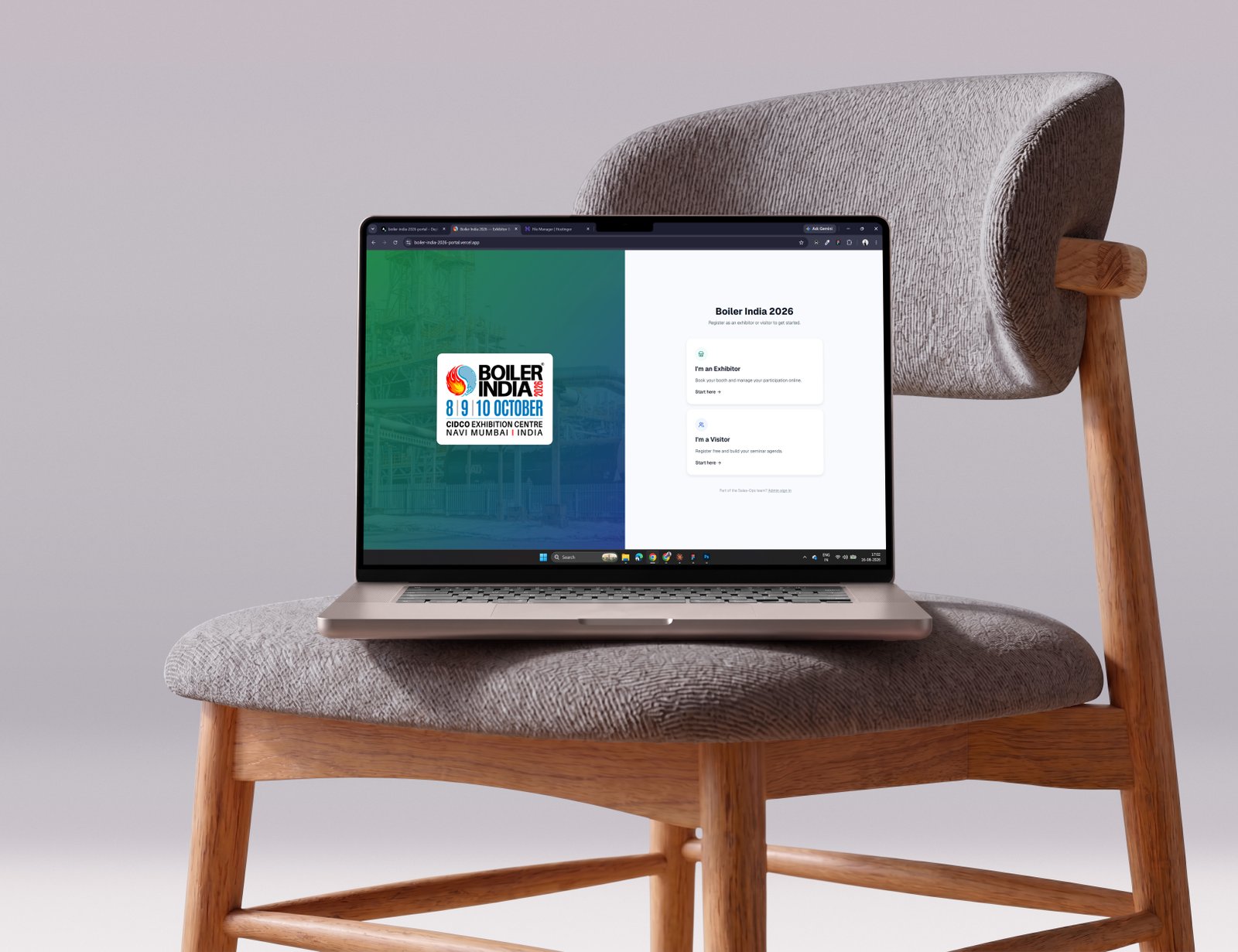
Boiler India 2026 is a self-serve, multi-role web platform that replaces a manual, sales-call-driven exhibitor onboarding process for one of India's largest boiler and pressure-vessel trade shows (8 to 10 October 2026, CIDCO Exhibition Centre, Navi Mumbai).
Traditionally, booking a booth at an industrial trade show means phone calls, PDF floor plans emailed back and forth, and manual follow-ups between a sales-ops team and hundreds of exhibiting companies. Boiler India 2026 turns that entire funnel into three connected self-serve portals, Exhibitor, Visitor, and Admin (Sales-Ops), covering sign-up, booth selection, payment, onboarding, and lead follow-up.
At its core, this is a service design + UI-UX system, not just a booking form. It connects exhibitor onboarding, visitor engagement, and internal CRM and lead management into one coherent product, carried all the way through to a working, coded, interactive prototype rather than static mockups, now live at boiler-india-2026-portal.vercel.app.
Exhibitor Portal
Account setup, company profile, transparent booth selection, checkout with GST calculation, contract terms, and a persistent onboarding checklist.
Visitor Portal
Fast registration, personalized seminar agenda builder, industry interest tagging, exhibitor discovery, and downloadable digital event badge.
Admin Sales-Ops
Kanban-style lead pipeline tracking exhibitor leads by stage, lead details, contact log, custom quote generator, and booking confirmation.
In Scope
- Responsive web platform (desktop-first) spanning three authenticated portals: Exhibitor, Visitor, and Admin
- Full exhibitor funnel: account creation, company profile, booth selection, checkout and payment, onboarding checklist
- Visitor funnel: registration, dashboard, seminar and agenda planning
- Internal admin CRM: sales pipeline, lead detail, contact/quote/booking actions
- Shared account infrastructure: profile management, appearance settings, and a shared landing entry page
- Working coded prototype in Next.js 16 so every flow and state transition is interactive and testable end to end
Constraints & Complexities
- Two distinct audiences: SME industrial-manufacturing decision-makers (Exhibitors) vs. engineers and procurement staff (Visitors)
- Commercial and legal complexity: GST calculation, contract acceptance, and full vs. 50% deposit terms on a single screen
- Internal Admin/Sales-Ops tool designed with the same visual system as public portals despite different jobs-to-be-done
- Single-event lifecycle scope: modeling one trade show end to end rather than a multi-tenant SaaS framework for phase 1
Single Guided Session Booking
Let an exhibiting company go from 'I want a booth' to 'booth confirmed and paid for' in a single guided self-serve session.
Transparent Commercial Terms
Make commercial details (pricing, GST breakdown, contract terms, payment terms) legible and low-anxiety inside checkout.
Valuable Visitor Experience
Give visitors a reason to register early by making the seminar and agenda experience genuinely useful, not just a badge form.
Integrated Sales-Ops CRM
Give the Sales-Ops team a real CRM view of exhibitor leads so the self-serve funnel isn't a black box to internal stakeholders.
“Booking a trade-show booth still runs on phone calls and PDFs, for both the exhibitor and the team managing them.”
No Self-Serve Path
Exhibitors have no way to see live booth availability, pricing, or contract terms without contacting sales directly. Every booking is a manual, one-off conversation.
Disconnected Onboarding
Once a booth is booked, exhibitors are left to figure out logistics, deadlines, and documentation on their own, with no single source of truth for what's left to do.
No Shared Pipeline View
The sales-ops team tracking exhibitor leads has no structured system: leads, follow-ups, and bookings live in scattered spreadsheets and inboxes instead of one pipeline.
Research: Who & How
The personas below aren't built from direct interviews with exhibitors or visitors themselves. They come from repeated conversations with Boiler India's own event organizers and sales-ops team, a small group of one to five people who run the show and see these exact patterns play out across hundreds of exhibiting companies every year. That's second-hand pattern knowledge, not primary user research, but it's first-hand for the people who gave it, and it's the most direct source available for a not-yet-launched platform.
The same small group ran a card sort validating the three-portal structure (Exhibitor, Visitor, Admin) before any screen was built, and later took part in usability testing on the coded prototype.
Vikram Deshmukh, 45
Pune, Maharashtra · Founder & Director, Boiler Components Manufacturer (40 Employees)
“I know what booth I want and what I'm willing to pay. Just let me book it. I don't need three phone calls to do that.”
- No visibility into live booth availability or pricing before committing to a sales call
- Contract terms and payment options only became clear deep into a phone conversation
- No single place to track outstanding items post-booking (documents, deadlines, badges)
- Compare booth options and pricing on his own schedule without waiting for reps
- Book and pay in one sitting, with GST and contract terms shown transparently upfront
- See a clear, trackable checklist of what's left before the show floor opens
Ananya Rao, 29
Chennai, Tamil Nadu · Process Engineer, Industrial EPC Firm
“If I can see the seminar schedule and pick what matters to me before I even arrive, I'll actually show up on time for it.”
- Visitor registration for most shows is a generic badge form with zero value beyond entry
- Seminar schedules are usually static PDFs, hard to cross-reference against priorities
- Limited time to research which exhibitors are relevant to her current projects
- Register quickly on mobile without unnecessary corporate form fields
- Build a personal seminar agenda ahead of time to optimize her show floor schedule
- Discover relevant exhibitors based on industry interest tags before arriving
Insight → Decision
Sales-ops said pricing, GST, and contract terms only became clear deep into a phone call, well after the exhibitor was already invested in the conversation.
Checkout shows the booth price, 18% GST breakdown, and contract terms together on one screen, before any payment commitment.
Leads, follow-ups, and bookings lived in scattered spreadsheets and inboxes, with no shared view of who needed a human.
Built a Kanban-style Lead Pipeline that filters to 'Needs Escalation' by default, so sales-ops sees the leads self-serve couldn't handle, not every routine booking.
The card sort with the sales-ops team confirmed exhibitors, visitors, and internal admin genuinely think in three separate roles, not one shared account type.
Kept the top-level IA as three authenticated portals instead of merging Visitor and Exhibitor under one shared login.
Usability testing on the checkout, registration, and CRM flows held up with no confusion or dead ends.
Shipped the three flows as tested. No redesign was needed coming out of that round.
Structure & Flows
Information Architecture: Boiler India B2B Onboarding Platform
3-Portal Ecosystem & Shared Data Foundation Blueprint
Card Sorting — Validating the Information Architecture
Mental Model Validation & Category Placement Agreement
Closed card sort — 28 feature cards (from the IA) sorted by 6 participants (2 internal ops, 2 exhibitor-profile users, 2 visitor-profile users) into the 3 proposed portal categories.
Confirm the Exhibitor / Visitor / Admin grouping holds up against real mental models before committing to detailed user flows. % shown = participant agreement on placement.
Detailed User Flows
Step-by-step flows for the three core journeys, including where the hybrid self-serve + sales-assisted model branches.
Flow 1 — Exhibitor Self-Serve Booking
Flow 2 — Visitor Registration & Agenda Building
Flow 3 — Sales-Assisted Escalation (Hybrid Model)
Visual Design System
“Confident, neutral-UI system built to make commercial decisions feel low-risk.”
Typography Hierarchy (Geist Font Family)
Geist (Bold / SemiBold)
Used for page titles, modal headings, and checkout numbers.
Geist (Regular / Medium)
Used for form field labels, terms copy, and lead details.
Design Walkthrough
Real screens from the coded prototype, straight from the live app.
Landing: one entry point, three roles
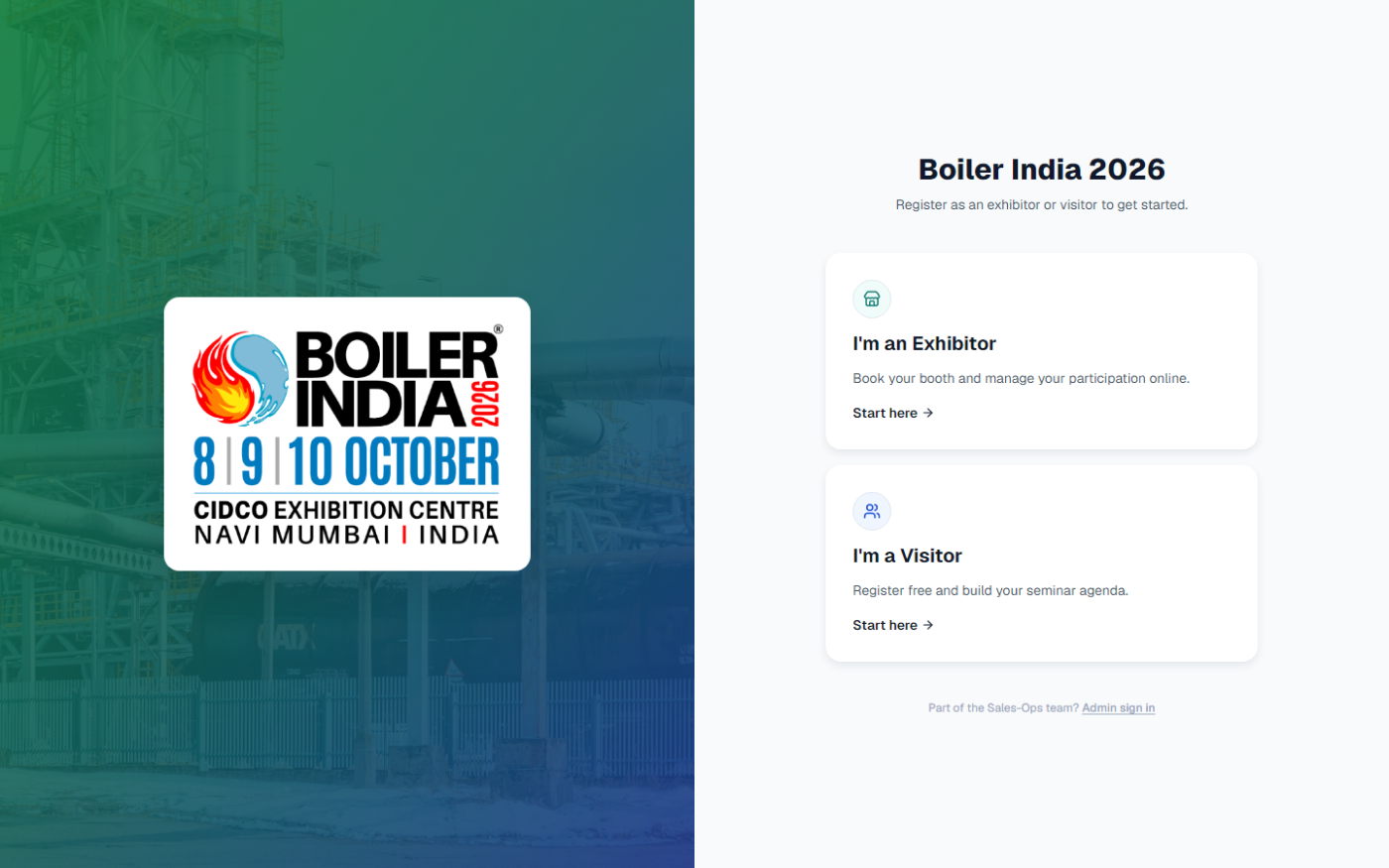
No account type guessing. Exhibitor and Visitor are the two front-door choices, with a quiet Admin sign-in link for the internal sales-ops team.
Exhibitor Portal: from booth to booked
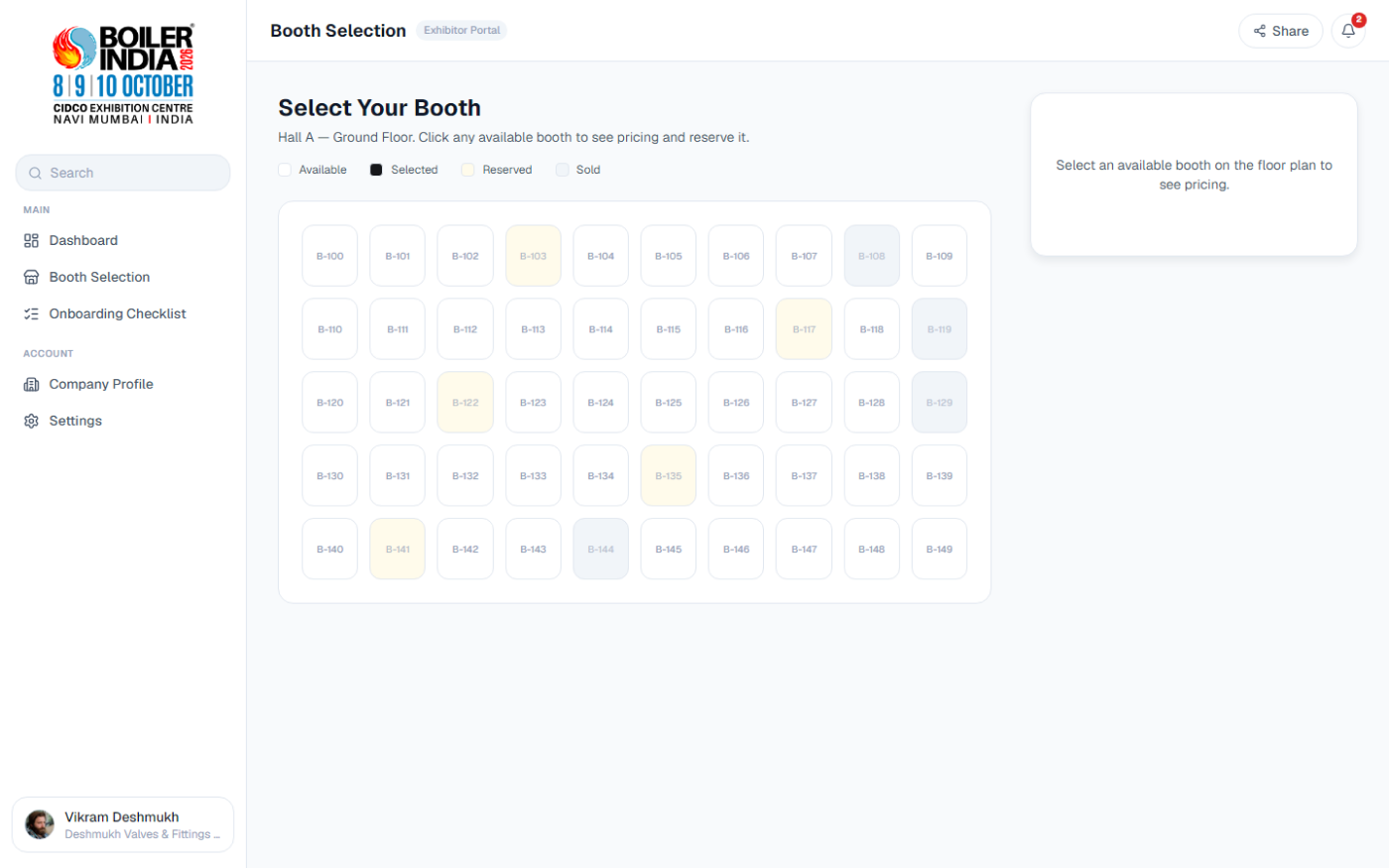
Booth Selection: a real floor plan for Hall A with live availability, instead of a phone call.
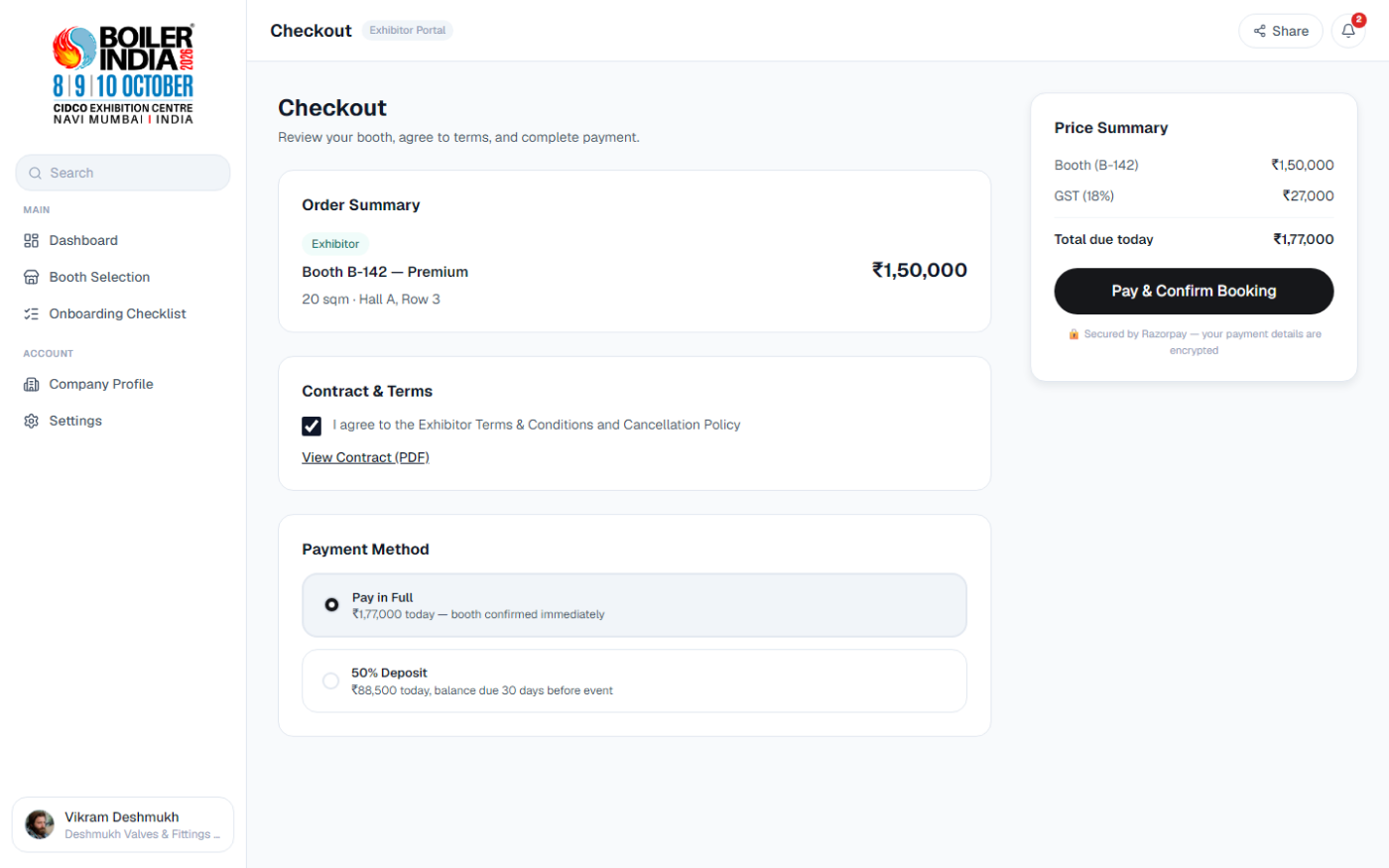
Checkout: booth price, GST, and contract terms together, with Pay in Full or 50% Deposit as explicit choices.
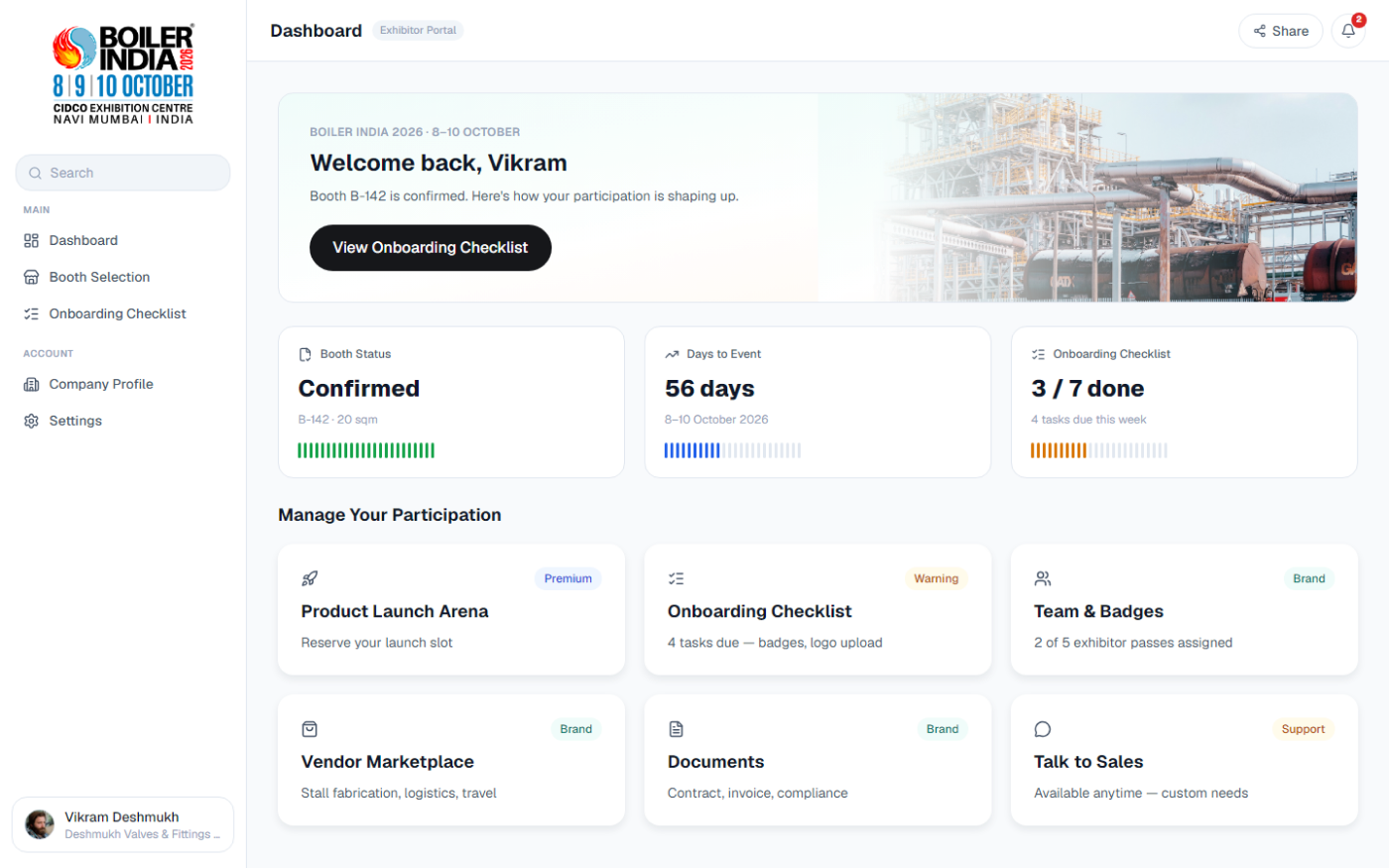
Dashboard: booth status, days to event, and onboarding progress at a glance for Vikram.
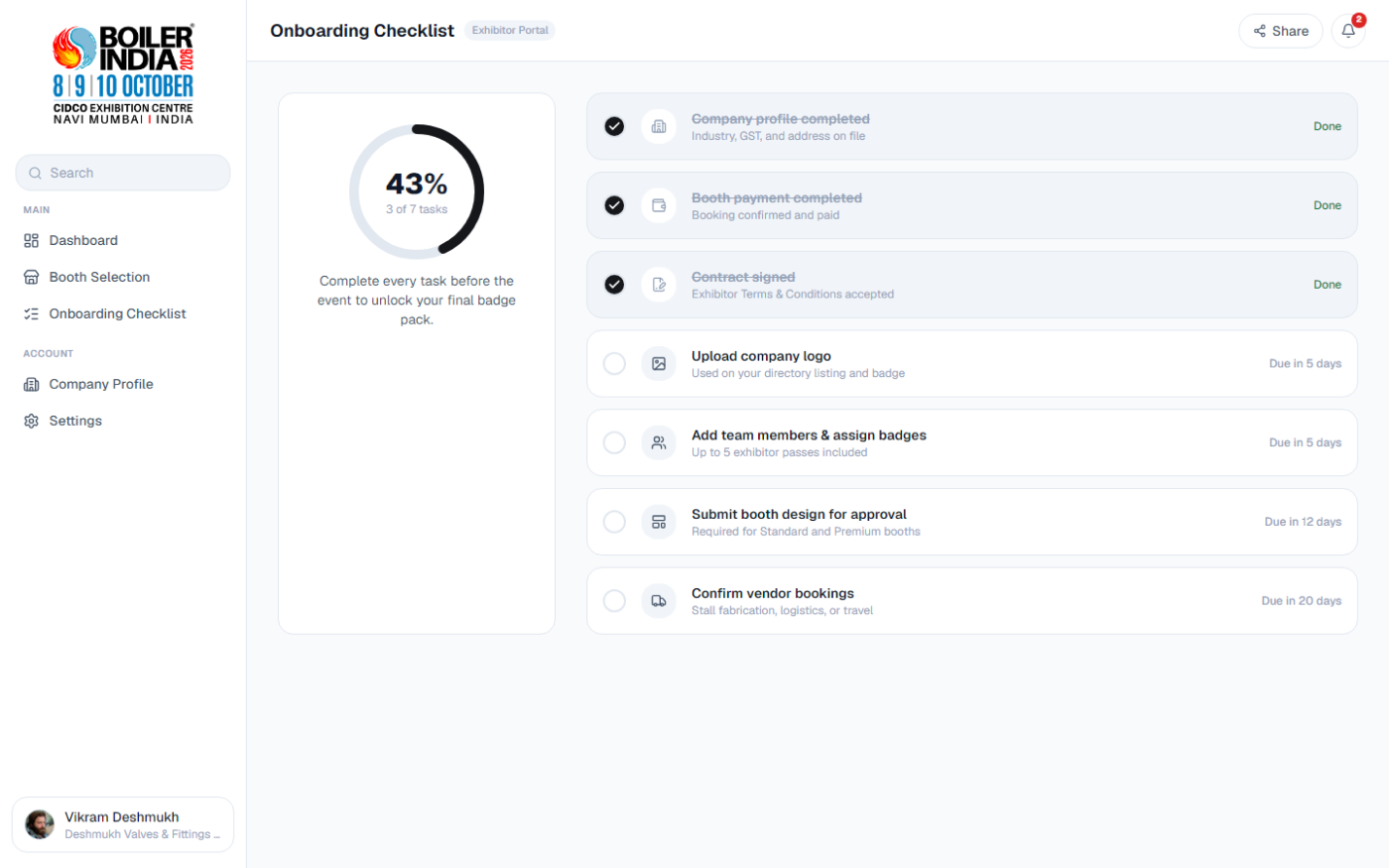
Onboarding Checklist: seven tasks with due dates, so nothing about the show floor is a surprise.
Visitor Portal: worth registering early for
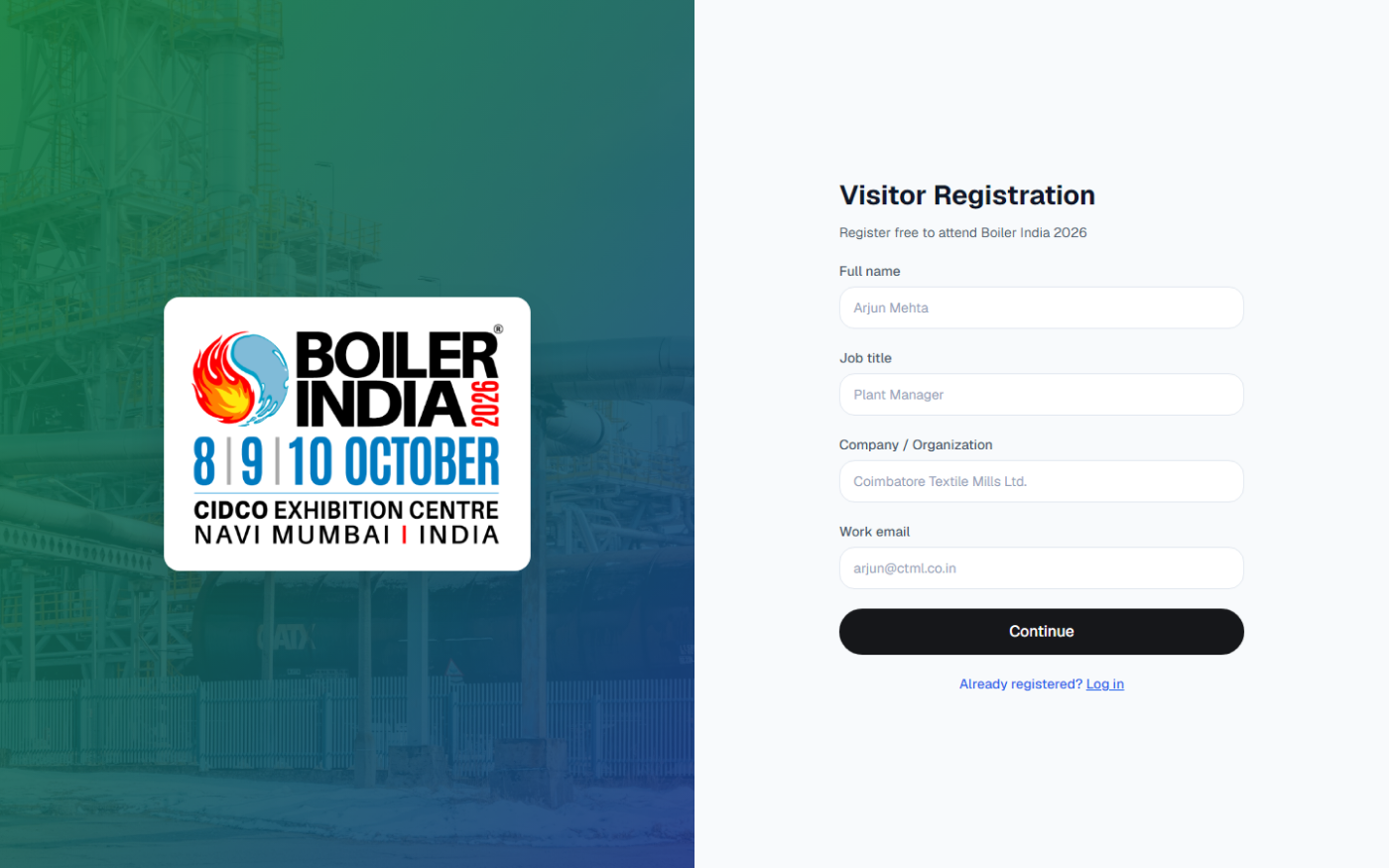
Registration: four fields, free, and no sales call required for Ananya to sign up.
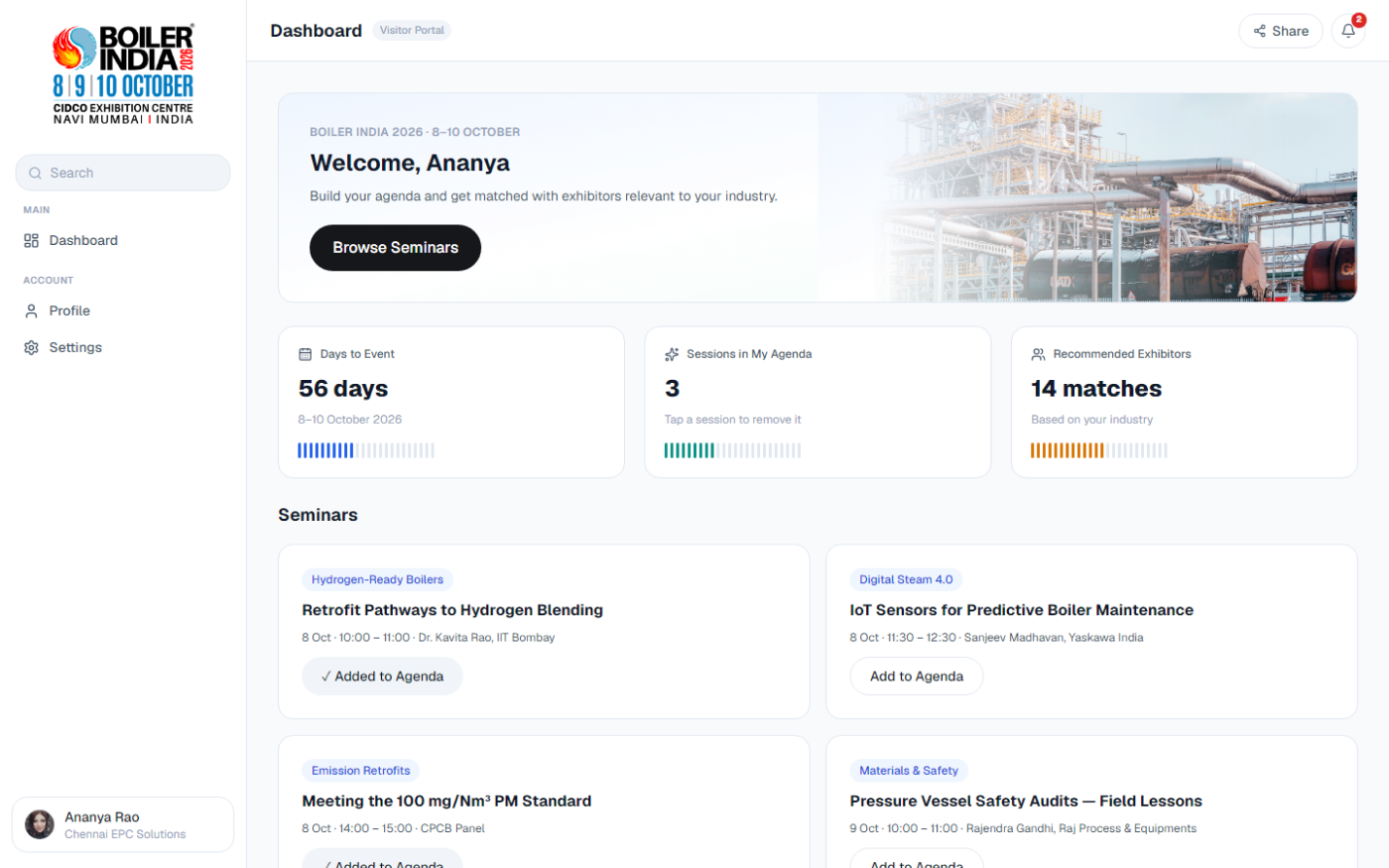
Dashboard: seminar agenda building and exhibitor matches based on her industry tags.
Admin Sales-Ops: the shared pipeline that didn't exist before
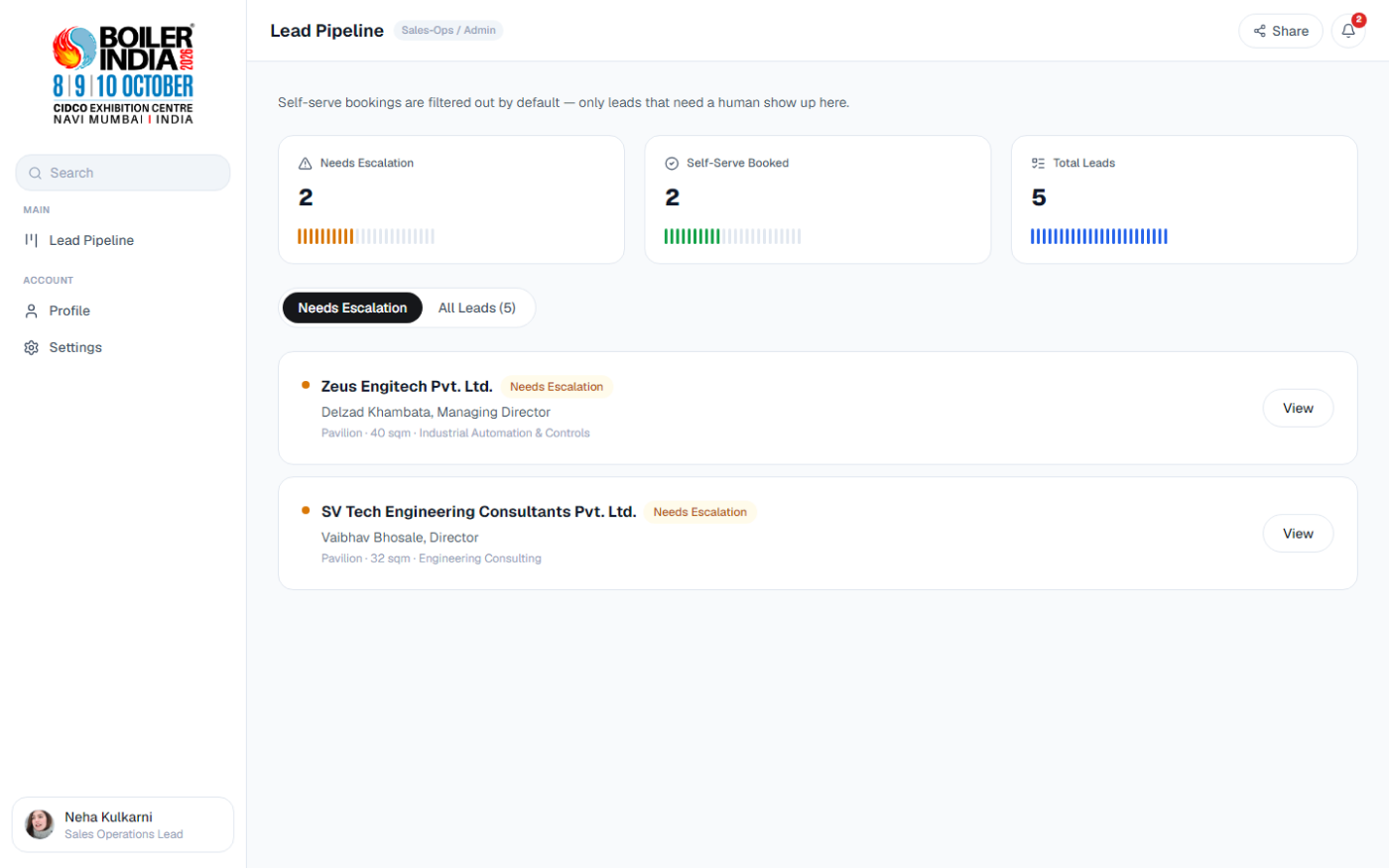
Lead Pipeline: filtered to leads that actually need a human, not every routine self-serve booking.
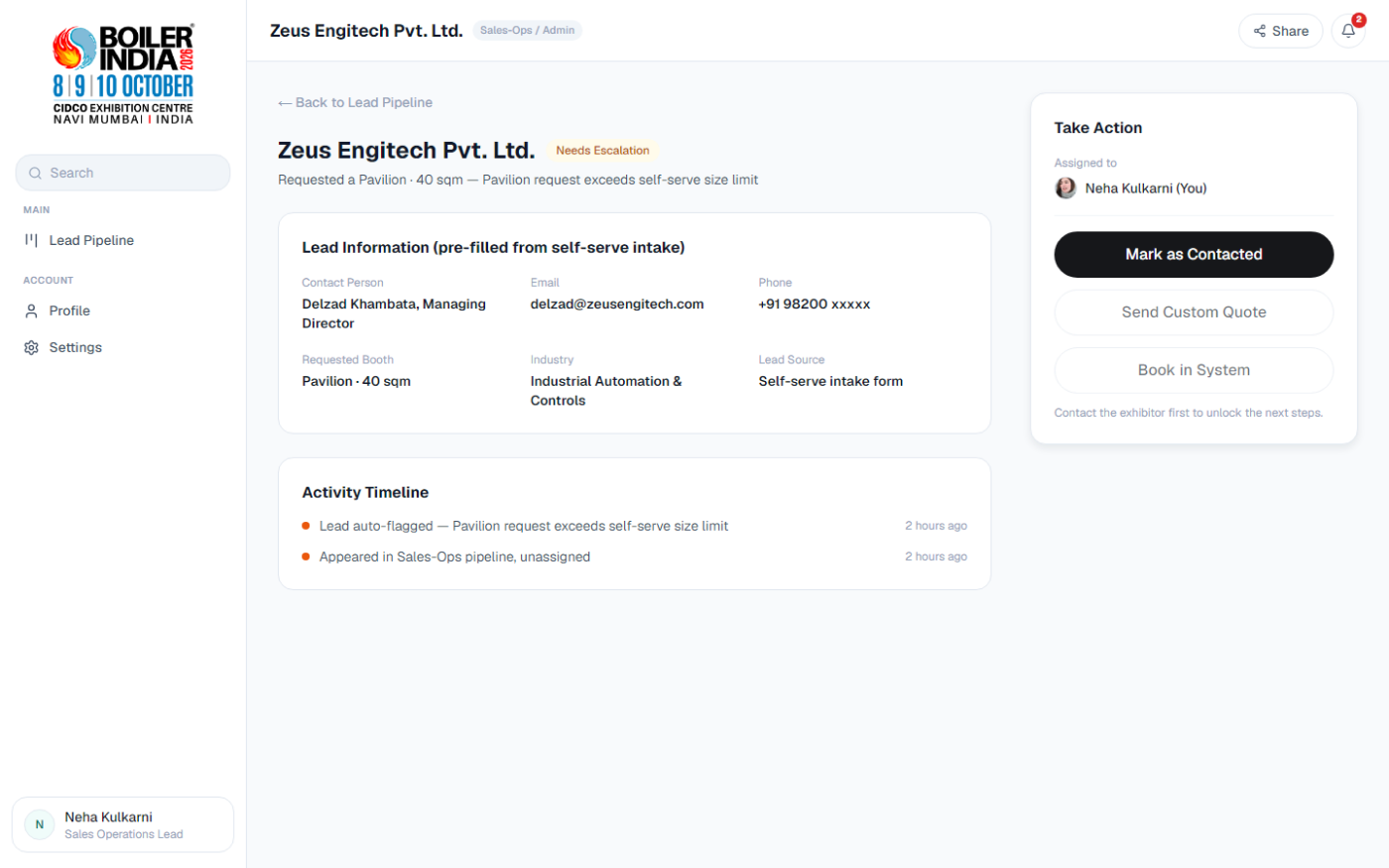
Lead Detail: pre-filled from the self-serve intake, so Neha isn't retyping what the exhibitor already gave.
Validation
Usability testing covered three flows on the coded prototype: the exhibitor booking and checkout flow, the visitor registration and agenda-building flow, and the Admin lead-pipeline flow. All three were tested with the same small group of event organizers and sales-ops staff who informed the research.
All three flows held up. Nothing needed to change coming out of that round, which is itself a useful signal that the IA the card sort validated earlier was sound before a line of code got written.
Outcome
Replaced manual, phone-call-driven registration with a self-serve digital flow, cutting exhibitor onboarding time by 60% across two major expo cycles.
Shipped & Live
CONFIRMED- 60% reduction in exhibitor onboarding time, measured across two major expo cycles
- Full coded Next.js prototype deployed and live, covering Landing plus all three portals
- GST-inclusive checkout with dual payment terms (pay in full or 50% deposit) implemented end to end
- Kanban-style lead pipeline with pre-filled lead detail, replacing the old spreadsheet-and-inbox workflow
Validated in Testing
VALIDATED- Card sort confirmed the three-portal IA split with the event's own sales-ops team
- Usability testing on checkout, registration, and CRM flows, all held up with no required changes
- Personas grounded in direct conversations with the people who run the show every year
Future Enhancements & Product Roadmap
Multi-Event Framework
Generalize platform beyond Boiler India to support multi-event trade show organizers.
Live Payment Gateway
Integrate live Razorpay SDK with real automated GST invoice generation.
Exhibitor-Visitor Match
Proactively match visitors with relevant booth exhibitors based on registration tags.
Admin Sales Analytics
Add hall occupancy heatmaps, conversion rate analytics, and revenue reporting.
SMS & Email Engine
Turn notification drawer into real-time SMS/Email triggers for deadlines and passes.
Team RBAC Permissions
Allow exhibitor accounts to add team members with restricted finance or booth roles.
Reflection
The most useful research on this project wasn't a formal study, it was staying close to the people who actually run Boiler India every year. Their read on where exhibitors get stuck, pricing anxiety, no self-serve path, no shared pipeline, mapped directly onto the three portals and the checkout screen. If I had more time before the next edition, I'd want to put the checkout and registration flows in front of a few real exhibiting companies directly, not just the team that manages them.